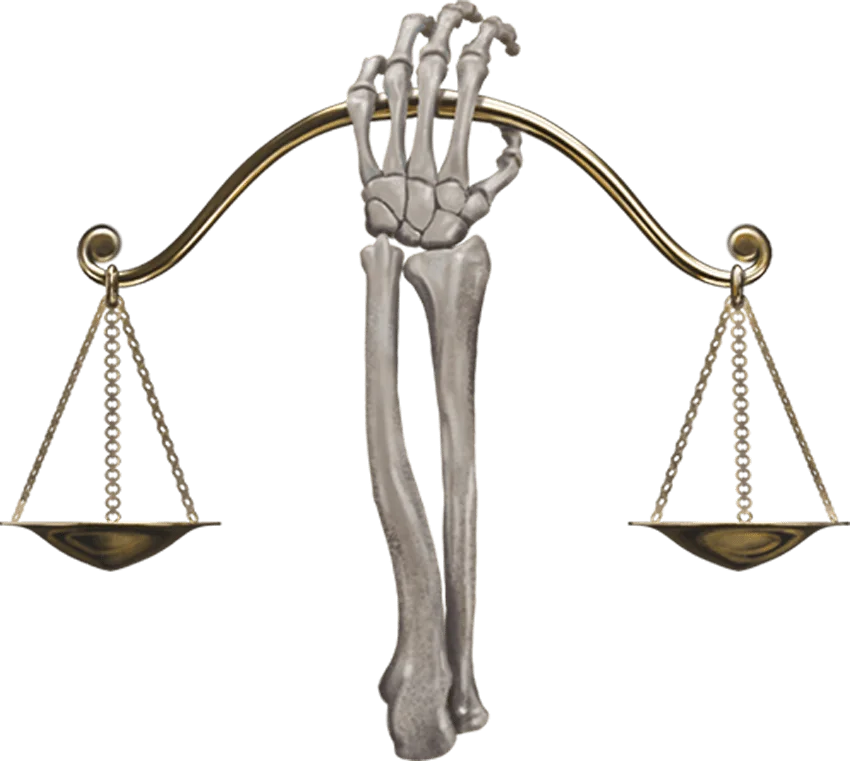
Alignment: Lawful Neutral Alternate Names: The Judge of the Damned, The Lord of the Dead Category: None Domains: Death, Grave Home Plane: Astral Plane (Fugue Plane) Pantheon: Faerûnian Symbol: Upright skeletal arm holding balanced scales Typical Worshipers: Funeral workers, the dying
Kelemvor was not always a god. He became the deity of death by confronting and usurping Cyric, who held the portfolio of the dead before him.
The just, fair, and comforting god of death. When death occurs, Kelemvor takes a soul by the hand and leads it to the proper afterlife. Death is not a thing to be feared in his eyes, but a natural part of life that must be accepted in its time. When he communicates with his worshipers, he appears in dreams as a silver-haired man wearing black hooded robes and a silver funeral mask, or speaks through the body of a person who has recently died.
Priests of Kelemvor — the most elite of whom are known as doomguides — provide people with peaceful transitions into death. They sort the dying’s affairs, counsel bereaved mourners, and officiate funeral rites. The tenets of Kelemvor’s faith compel his followers to forestall or prevent untimely deaths whenever possible, and to eliminate the scourge of the undead. Several organizations outside the formal priesthood focus on these tenets in different ways: the Vital Breath concentrates on stopping the spread of plagues and magical contagions, the Judge’s Vigil focuses on the prevention of murder, and the Knights of the Eternal Order seek out and destroy powerful undead.
The vehement opposition to undead puts Kelemvor’s followers at odds with necromancers, priests of Myrkul, and others who create undead. It also causes conflict in unexpected ways — priests of Kelemvor routinely destroy writings about the creation of undead, an act that offends those who value knowledge for its own sake, such as the faithful of Oghma and Deneir. Even undead of good alignment are not spared; Kelemvor’s devotees seek their destruction regardless.
The Chosen of Kelemvor embody the natural course of death. They are optimistic and jubilant, rejoicing in the thriving of life in its time, and possess the ability to resurrect the victims of improper deaths.